We use Google Analytics and Google Tag Manager to measure site performance and improve the website. You can accept or reject analytics cookies. Read more in our Cookies Policy.

octopus logo
main logo

How To Ensure Electrical Compliance In Your Commercial Property

Running a business in Bromley or anywhere in the UK comes with more than just financial responsibilities – ensuring your property meets commercial electrical compliance standards is essential for the safety of staff, customers, and visitors. Ignoring these obligations can result in serious risks, costly fines, or even prosecution.

In this blog, we’ll guide you through how to ensure electrical compliance in your commercial property, why it matters, and what steps you should take as a business owner or property manager.

Need trusted electricians for commercial electrical safety testing in Bromley? Call us today on 0800 112 5050 / 07476 526 502 or email office@couttselectrical.co.uk to book your inspection.

Electrical compliance isn’t just about ticking boxes – it’s about protecting lives, keeping your business legally secure, and ensuring safe, uninterrupted operations. At Coutts Electrical Contractors Ltd, we bring over 30 years of expertise to help businesses in Bromley and Kent achieve complete peace of mind.

Why Commercial Electrical Compliance Matters

Commercial properties are legally required to meet workplace electrical safety standards. These obligations are not only about avoiding penalties; they ensure the well-being of employees, clients, and visitors.

Failing to meet commercial electrical safety regulations can lead to:

  • Risk of electrical fires or accidents.
  • Insurance invalidation.
  • Business disruption due to unsafe systems.
  • Legal consequences for non-compliance.

As professional electrical contractors, we’ve seen how businesses benefit from proactive testing and inspections. Compliance brings peace of mind while also protecting your reputation.

Key Regulations For Commercial Electrical Safety

1. Electrical Safety Regulations Every Business Should Know

UK businesses must follow the Electrical Safety Regulations outlined in the Health and Safety at Work Act and Electricity at Work Regulations. These demand that electrical installations in commercial buildings remain safe at all times.

2. Workplace Electrical Safety Standards

To stay compliant, businesses must adhere to workplace electrical safety standards that cover wiring, sockets, lighting, and appliances. Regular inspections and maintenance are required to reduce risks.

3. Commercial Electrical Inspection Requirements

The most common checks include:

  • EICR for commercial property (Electrical Installation Condition Report).
  • PAT testing (Portable Appliance Testing).
  • Emergency lighting inspections.

Each of these forms a critical part of electrical compliance for business owners, ensuring both safety and legal conformity.

Also Read: Importance Of Electrical Safety

How To Ensure Electrical Compliance In Your Commercial Property

When clients ask us how to ensure electrical compliance, we always recommend a structured approach:

1. Arrange Regular Electrical Audits

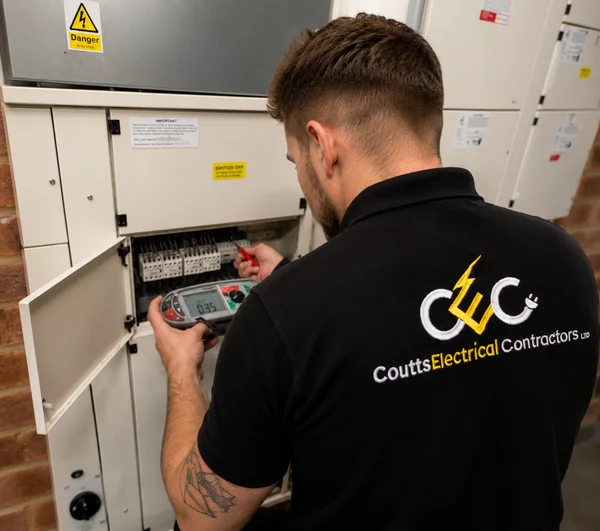
A professional electrical audit for offices or warehouses provides a clear overview of your installation’s condition. This includes checking wiring, distribution boards, sockets, and lighting.

Our electrical audit for commercial buildings identifies issues early, allowing us to fix them before they escalate.

2. Schedule An EICR (Electrical Installation Condition Report)

An EICR for commercial property is one of the most critical documents for compliance. It records the condition of your installation and highlights any risks.

For most commercial properties, an EICR should be carried out every 5 years, or sooner if recommended.

3. Ensure PAT Testing Is Up To Date

Businesses must ensure portable appliances such as kettles, printers, or computers are safe. This is achieved with PAT testing, which helps meet commercial property compliance requirements.

4. Maintain Emergency Systems

Emergency lighting and backup power supplies are vital in commercial spaces. Testing ensures these systems function during power failures, keeping occupants safe and meeting legal standards.

5. Keep Detailed Compliance Records

Maintaining compliance documents is essential. If your business is ever inspected, records of your commercial electrical inspections demonstrate due diligence.

Contact Coutts Electrical Contractors

The Role Of Professional Electricians In Compliance

While some visual checks can be done in-house, true compliance requires expert knowledge. At Coutts Electrical Contractors Ltd, we provide:

  • Comprehensive inspections in Bromley and across Kent.
  • Certified reports for landlords, offices, and commercial buildings.
  • 24/7 emergency response for urgent electrical issues.

We’re NICEIC-approved, OZEV-approved, and employ High Voltage Authorised Persons. This means you can trust us with the most complex commercial electrical safety requirements.

If you’re searching for an experienced commercial electrician in Kent, our team is here to help.

Conclusion

Keeping your property compliant with commercial electrical compliance regulations is not just a legal requirement – it’s about ensuring the ongoing safety and efficiency of your workplace. From carrying out EICRs for commercial properties to performing electrical audits for offices, we make compliance simple, stress-free, and cost-effective.

At Coutts Electrical Contractors Ltd, we bring over 30 years of experience in workplace electrical safety to every job. Our accreditations and customer-focused approach mean you’re in trusted hands.

Need help staying compliant? Call us on 0800 112 5050 / 07476 526 502 or email us at office@couttselectrical.co.uk today.

FAQs

1. What is included in an EICR for commercial property?

An Electrical Installation Condition Report checks wiring, sockets, switches, distribution boards, and other installations. It highlights risks, defects, or outdated systems.

2. How often should a commercial property have an electrical inspection?

Most businesses require an EICR every 5 years, but some environments, such as factories or gyms, may need them more frequently.

3. Is PAT testing legally required in commercial properties?

While not strictly law, PAT testing is strongly recommended under electrical compliance for business owners, and it helps meet insurance and safety requirements.

4. Who can carry out electrical audits for commercial buildings?

Only qualified electricians should conduct an electrical audit for commercial buildings, ensuring compliance with commercial electrical safety regulations.

5. What happens if my business fails an EICR inspection?

If your property fails, we’ll provide clear recommendations and carry out remedial works to bring your installation up to commercial property compliance standards.

6. How can I prepare for a commercial electrical inspection?

Ensure access to all electrical areas, keep past compliance records ready, and report any known issues to your electrician before the commercial electrical inspection begins.

3rd September 2025

Contact UsCall Us